AI in Retouching: Assistant or Usurper?
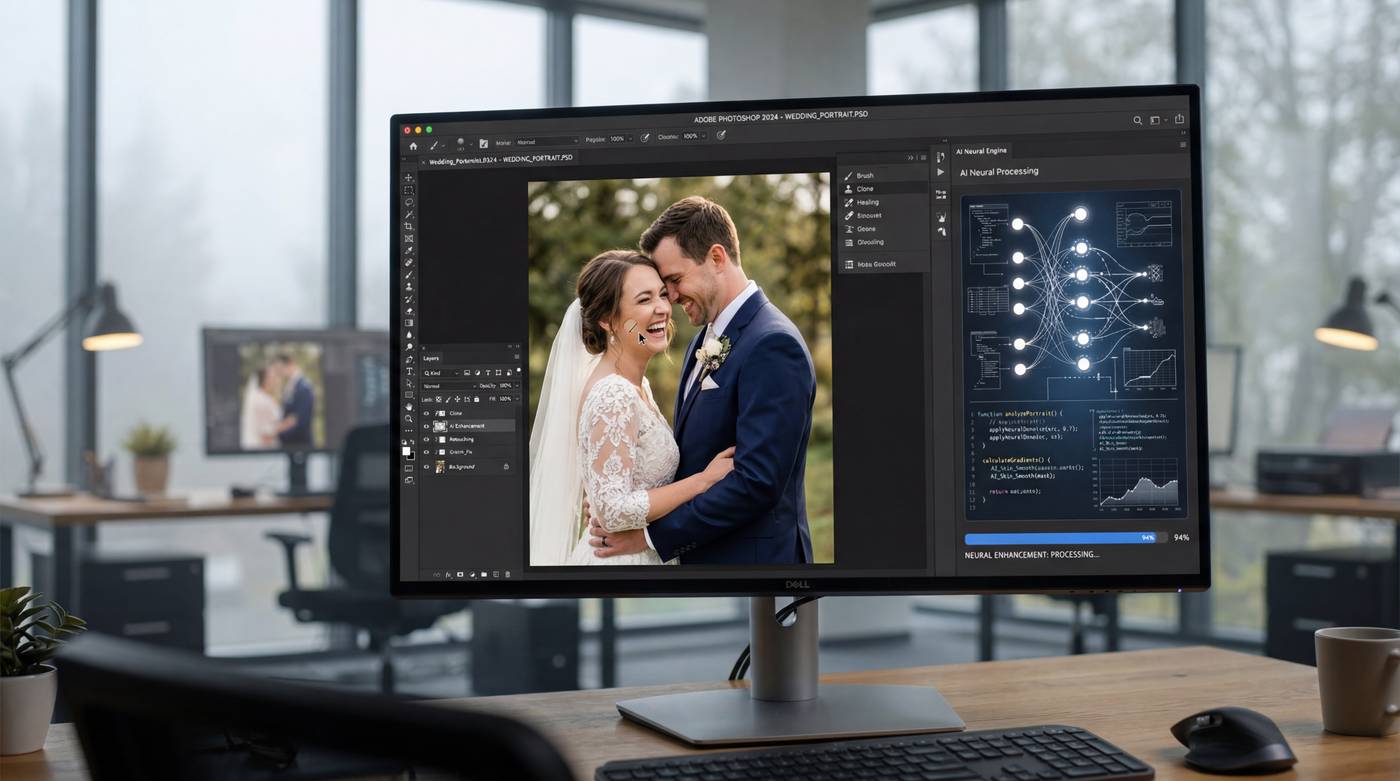
AI in Retouching: Assistant or Usurper? Unless you’ve been living in a cave without internet access for the past year or two, you know exactly how Artificial Intelligence (AI) has turned the creative industry completely upside down. The world of photography and retouching is no exception. With just a few clicks, AI can fill in a background, smooth out skin, or change a model's outfit entirely. Many are sounding the alarm, claiming that the traditional retouching profession is dead. But can an algorithm truly take our jobs away, or is AI actually the best thing that ever happened to the industry? Let’s take an honest look at the marriage of pixel magic and smart machines! The Super-Assistant Who Never Gets Tired Let’s face it: certain stages of retouching are incredibly tedious. Cleaning dust spots off backgrounds for hours, selecting individual stray hairs, or removing skin blemishes one by one... well, it’s hardly the peak of creativity. This is where AI steps in, and this is exactly why we should love it: Massive Time Savings: Tasks that used to take 20 minutes of manual masking and brushing—like using Adobe Firefly or various AI-driven plugins—can now be done in two seconds (and often with pinpoint accuracy). Generative Fill: Did the camera cut off the model's elbow? Is the background a bit too tight? AI expands the image canvas in seconds, matching both textures and lighting seamlessly. Selective Masking: One-click object selection or background removal is an absolute game-changer that can save days of work on larger projects. Why AI Won't Replace Humans (For Now) If everything is so simple, why do we still need flesh-and-blood retouchers? Because AI has one massive flaw: it lacks taste, empathy, and an understanding of human context. AI is an executor, not an artist. The "Plastic" Look: If you leave skin retouching entirely up to automated AI, the result often looks like a wax figure. AI doesn't inherently know where natural skin texture ends and an actual blemish begins. Inconsistency: Try color grading or editing a 500-image wedding gallery purely with generative AI. The algorithm will make slightly different choices on every single frame. A cohesive portfolio requires human eyes and intentional control. Client Communication: AI cannot interpret abstract client feedback like, “Make the lighting feel a bit more elegant and moody.” That requires human intelligence and nuance. The Formula for the Future: Human + AI The new generation of retouchers is no longer fighting the technology; they are integrating it into their workflows. We don’t look at AI as a rival, but rather as an incredibly fast intern who does the "dirty work." With that time freed up, a retoucher can finally focus on what they do best: mastering the interplay of light and shadow (High-end Dodge & Burn), establishing a signature color grade, and executing the overall artistic vision. Conclusion: Who Will Survive? AI is not going to replace retouchers. However, retouchers who don't use AI will be replaced by those who have learned to master it. The technology is here to stay—the only question left is whether you will make the most of it, or watch the train pass you by?