What You Need to Know About Online Photo Restoration
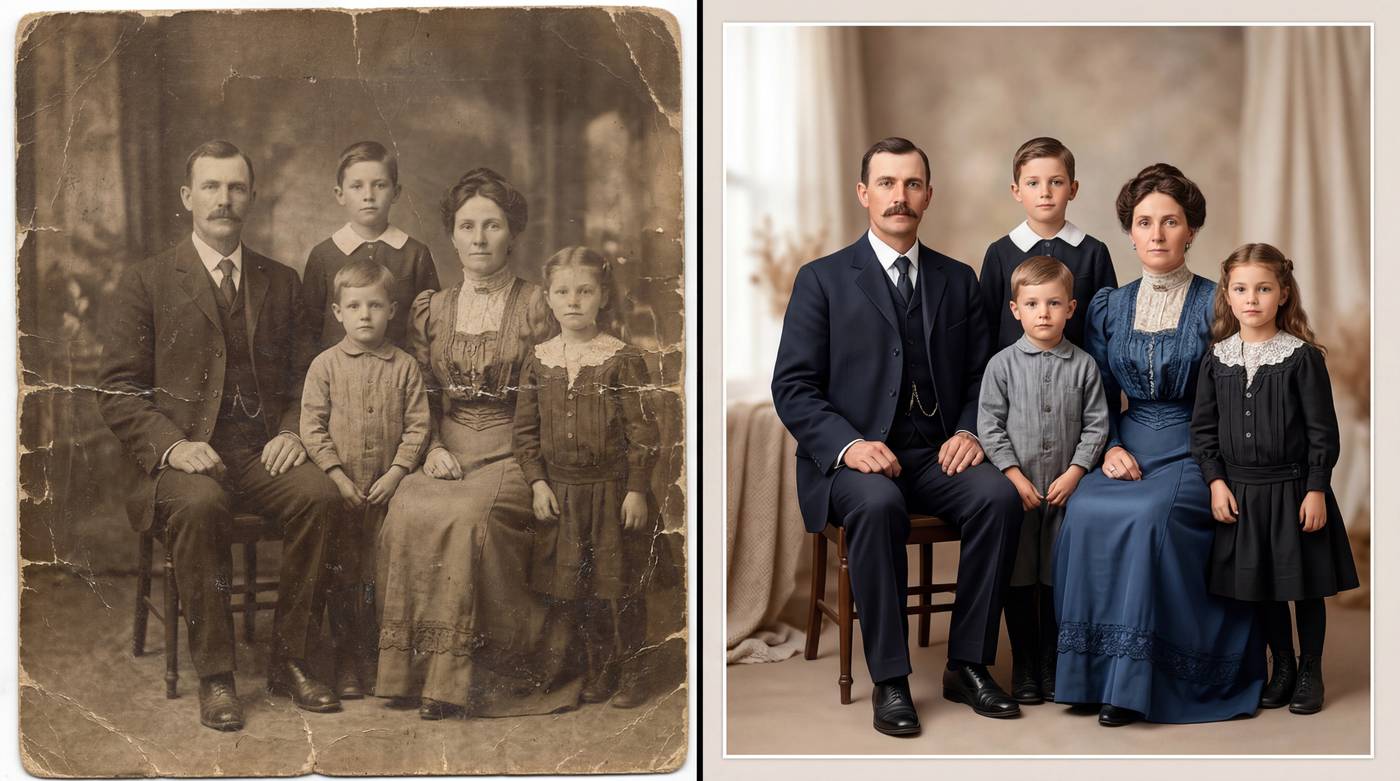
What You Need to Know About Online Photo Restoration? Deep inside our attics, drawers, or old family albums, we all have family heirlooms that have taken a beating from Father Time. Faded great-grandparents, yellowed wedding photos, torn childhood memories. We used to guard these with fear of losing them forever, but today, you don’t have to wait for them to turn to dust. In the era of online photo restoration, you can send them to a professional retoucher from anywhere in the world to bring them back to life. But where is the line between digital magic and reality? What can actually be saved, and what is, unfortunately, a lost cause? The Pros of Online Photo Restoration Convenience and Safety: You don’t have to mail out your single, irreplaceable family heirloom, nor do you have to travel anywhere in person. You can handle everything from the comfort of your couch. Immortality: A digitally restored image will never yellow, tear, or suffer water damage again. You can print as many copies as you want for family members or back it up safely in the cloud. A Colorful Past: With modern techniques, black-and-white photos can be realistically colorized, bringing the past closer to you than ever before. The Only Con of the Process The Quality of the Digitalization: Since the retoucher doesn't physically hold the original paper photograph, they have to work entirely with what you send them online. If your photo is poorly scanned or photographed, the retoucher’s hands are tied. What CAN Be Saved? (The Digital Miracles) Modern retouching software and professional experience can achieve mind-blowing results. Feel free to submit your image if it suffers from any of the following flaws: Scratches, Cracks, and Folds: Even if the paper is heavily creased or literally torn to pieces, as long as the pieces are there, a retoucher can piece them back together and make the damage invisible. Stains and Discoloration: Water damage, mold spots, or the yellowing and fading caused by aging can be fixed almost 100% of the time. Missing Backgrounds or Edges: If a corner of the photo is ripped off or a part of the background is destroyed, it can be reconstructed using texture cloning and digital painting. What is a LOST CAUSE? (What Cannot Be Saved) As powerful as Photoshop is, it cannot generate detailed information out of thin air. In the following cases, the image is unfortunately unsalvageable: If the FACE is Missing or Completely Destroyed: If mice chewed through great-grandpa’s face, or if the photo ripped right across his features, a retoucher cannot restore it. There is no way of knowing what his original nose or eye shape looked like. (Exception: if you have another photo of the same person from which the face can be transplanted). Extreme Blur and Motion Blur: If the original photo was completely out of focus to begin with, those details cannot be "sharpened" later. What the camera failed to capture back in 1950, the software cannot dig up today. Unrecognizably Tiny Details: If you take a group photo the size of a postcard and want to crop and enhance just one person's face into a crystal-clear portrait, it won't work. The result will just be a blurry smudge of pixels. How to Submit Your Image for the Best Results If you want your family memory to turn out as beautiful as possible, do not just take a quick picture of the old photo with your smartphone under a desk lamp (as this causes glare, reflections, and lens distortion). Pro Tip: Visit your local print shop or use a home flatbed scanner, and scan the photo at a minimum of 600 DPI (or higher) as a TIFF or a high-quality JPG file. With this kind of raw material, a retoucher can truly work wonders, and grandma is guaranteed to shed a tear when she sees the final result!